
Seeing “Objected” against your trademark application can be unsettling, especially when the examination report cites legal sections and other brands. It means the Trade Marks Registry has raised questions about registration. It does not mean the application has already been refused.
Your next job is practical: download the report, identify every ground, prepare a supported response and file it within the prescribed time. Here is how a trademark objection reply works in India.
Under Rule 33(4), the applicant has one month from receipt of the examination report to respond. If no response is made, the Registrar may treat the application as abandoned. Check the report and communication record immediately; do not calculate the deadline from the date you happened to notice the “Objected” status.
What is a trademark examination objection?
After filing, the Registry examines the mark, its goods or services, any claimed use and earlier marks on record. If it sees a ground for refusal or wants a condition or limitation, it communicates the issue in an examination report. The applicant can respond with legal submissions and supporting material. Rule 33 of the Trade Marks Rules, 2017 Official ↗ sets out this process.
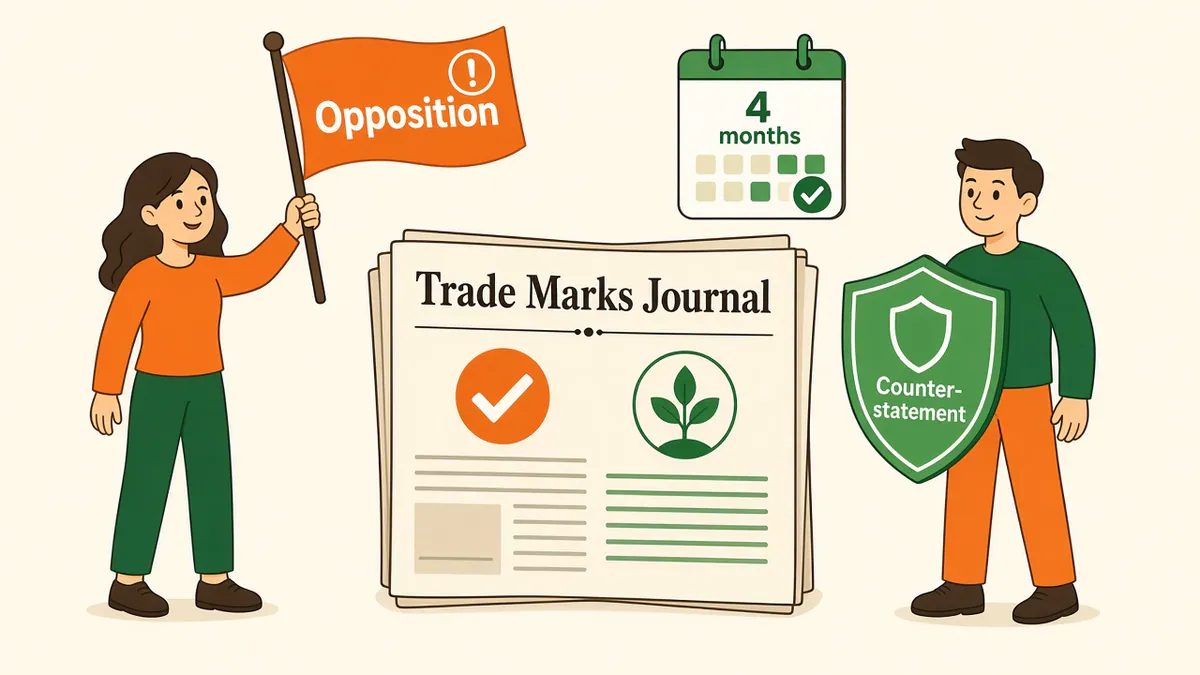
An objection comes from the Registry during examination. An opposition is a separate challenge that another person can file after the application is advertised in the Trade Marks Journal. A refusal is an adverse decision after the relevant process. These stages need different responses, so read the actual document rather than relying only on a status label. IP India explains the application workflow Official ↗.
First, find the report and confirm the deadline
Use your application number to check the IP India trademark application status and correspondence Official ↗. Download the examination report, note its date and how and when it was received by the applicant or authorised agent, and record each cited section and earlier mark. Keep the email address and address for service current. The rule says one month from receipt, and a report may itself give the filing direction.
Do not assume a reminder will extend the deadline. If the period has already passed, examine the current correspondence and obtain case-specific advice promptly instead of submitting an ordinary reply and assuming the application remains active. Rule 33 uses “may treat” as abandoned; the application record and any notice matter.
Common reasons for an objection
| Report ground | What the examiner is asking |
|---|---|
| Section 9 | Can the mark identify one business, or is it descriptive, customary, deceptive or otherwise prohibited? |
| Section 11 | Is an earlier mark sufficiently similar, for relevant goods or services, to cause confusion or another statutory conflict? |
| Formal requirement | Is information or evidence missing, inconsistent or unclear, such as a claim of earlier use? |
Section 9: the mark itself
Section 9 of the Trade Marks Act, 1999 Official ↗ includes marks lacking distinctiveness, marks that merely describe characteristics of goods or services, and terms customary in the trade. It also covers, among other things, marks likely to deceive or confuse and certain prohibited matter. A generic phrase cannot be made registrable simply by writing that the applicant likes it.
A useful response identifies the precise sub-section in the report. For a distinctive coined term, explain why the whole mark functions as a badge of origin for the specified goods or services. If relying on distinctiveness gained through use for a section 9(1) objection, demonstrate that the mark had acquired it before the application date; later advertising alone cannot establish that historical fact. Provide dated, relevant evidence rather than a broad assertion of popularity.
Section 11: conflict with an earlier mark
Section 11(1) Official ↗ considers identity or similarity with an earlier mark, the relevant goods or services, and a likelihood of confusion, including association. The report may list earlier application numbers. Search each cited record and compare the marks and their specified goods or services as a whole.
Explain concrete differences in appearance, pronunciation, meaning and commercial impression where they genuinely exist. Compare the goods or services and their market context, but do not claim that a different class number alone ends the matter. Conversely, marks in the same class do not automatically conflict. An earlier unregistered right or well-known mark can raise separate issues under section 11. If the marks are genuinely too close, a bare “no confusion” statement will be weak.
Formal issues and claimed prior use
The report can also identify a missing or inconsistent use claim, an unclear specification, or other document issue. Rule 25(2) Official ↗ requires an affidavit and supporting documents if use of the mark before filing is claimed. Check the application’s stated user date against real records. Do not invent an earlier date or attach documents from another entity as though they establish your own use.
What should the reply contain?
A persuasive response is tailored to the application and the examiner’s grounds. Use a simple structure:
- Identify the application. State the application number, mark, applicant, class and the examination report being answered.
- Address every objection separately. Quote or accurately summarise the section and explain the facts, applicable law and requested outcome for each ground.
- Compare cited marks carefully. For section 11, identify each relevant earlier mark and show the real differences, goods or services and reasons confusion is or is not likely.
- Attach a dated evidence index. Invoices, packaging, catalogues, advertisements, website archives and sales records can be useful where they actually show the mark, relevant goods or services, applicant and dates. A screenshot without provenance may carry little weight.
- Use an affidavit where required or helpful. If prior use was claimed, reconcile the affidavit and exhibits with the filing date and user date. Explain predecessor use only where there is a proper factual basis.
- Ask for acceptance or a hearing. Conclude with a clear request for the Registry to withdraw the objection and proceed; follow the report’s directions if requesting a hearing.
Prepare a short table for your own working file: objection → response → supporting exhibit. It helps you catch an unanswered ground before filing.
An amendment to the application is not the same as a reply. Rule 37 Official ↗ allows certain corrections or amendments on Form TM-M with the prescribed fee, but does not allow an amendment that substantially alters the applied mark or substitutes a new goods or services specification outside the original application. Narrowing a specification or correcting a genuine error must be assessed against those limits. An unsupported disclaimer or an attempted redesign of the mark is not an automatic cure.
How to file a trademark objection reply online
- Open the IP India Comprehensive E-Filing gateway Official ↗ and access the account authorised for the application.
- Select Miscellaneous Reply → Reply to Examination Report (MIS-R) for the correct application number. Recent official examination reports Official ↗ specify this path and the subject “REPLY TO EXAMINATION REPORT.” Follow the instructions on your own report if the portal wording changes.
- Upload the signed reply and legible supporting documents in the formats the portal accepts. Check applicant and application details, exhibits, page order and upload status.
- Submit within the one-month period, then save the acknowledgement and verify the correspondence or status record. A draft on your computer is not a filed reply.
The ordinary MIS-R examination reply does not have a separate prescribed government filing fee in the official fee schedule Official ↗. Professional drafting charges are separate. If you also need a TM-M correction or amendment, that is a fee-bearing request; an official examination report says to file the TM-M first and then still file the MIS-R response. Other proceedings may also have their own fees.
What happens after the reply?
The Registry considers a timely response. Under Rule 33(5)–(8) Official ↗, it may accept the application and advertise it, provide a hearing if the response is unsatisfactory or a hearing was requested, and then pass an appropriate order. Do not mistake “Reply Filed” for registration. Watch for a hearing notice, prepare to explain the same factual record, and attend as directed.
If accepted, the mark is advertised in the Trade Marks Journal. Under Rule 42 Official ↗, another person can file an opposition on Form TM-O within four months from the Journal publication. Only after the applicable publication and opposition process can an eligible mark proceed to registration. Our trademark opposition guide covers that separate stage.
If the Registrar refuses the application, obtain and review the written decision promptly. Available review or appeal routes depend on the order and current law; get advice on the proper forum and deadline rather than treating another MIS-R as a substitute. A new filing or a different mark may sometimes be commercially sensible, but neither erases existing third-party rights.
Can you use the mark while it is objected?
An objection to registration does not, by itself, forbid all use of a brand. ™ may signal a claim to a mark, but it is not proof of registration or a defence against an earlier owner’s rights. Assess infringement, passing off and business risk before continuing a disputed mark. Do not use ® to represent an unregistered Indian mark as registered; section 107 Official ↗ addresses false representations of registration. See our ™ and ® explainer.
Reduce the risk on your next application
- Search for similar word and device marks before filing, including close spellings and sound-alike names.
- Choose a distinctive mark; describing the product is usually weaker than identifying its source.
- Specify the actual goods and services accurately, and check the applicant name and class.
- If claiming use before filing, collect the dated evidence and user affidavit required by Rule 25.
- Keep the application email and address for service monitored until registration or final disposal.
Your next step
Open the report today, calculate one month from its receipt, and make an objection-by-objection evidence list. A timely, accurate reply gives the Registry a basis to reconsider the application; it does not guarantee acceptance. If you need support with the response and filing, TaxQue’s trademark objection reply service can help. The primary rules are the Trade Marks Act, 1999 Official ↗ and Trade Marks Rules, 2017 Official ↗.