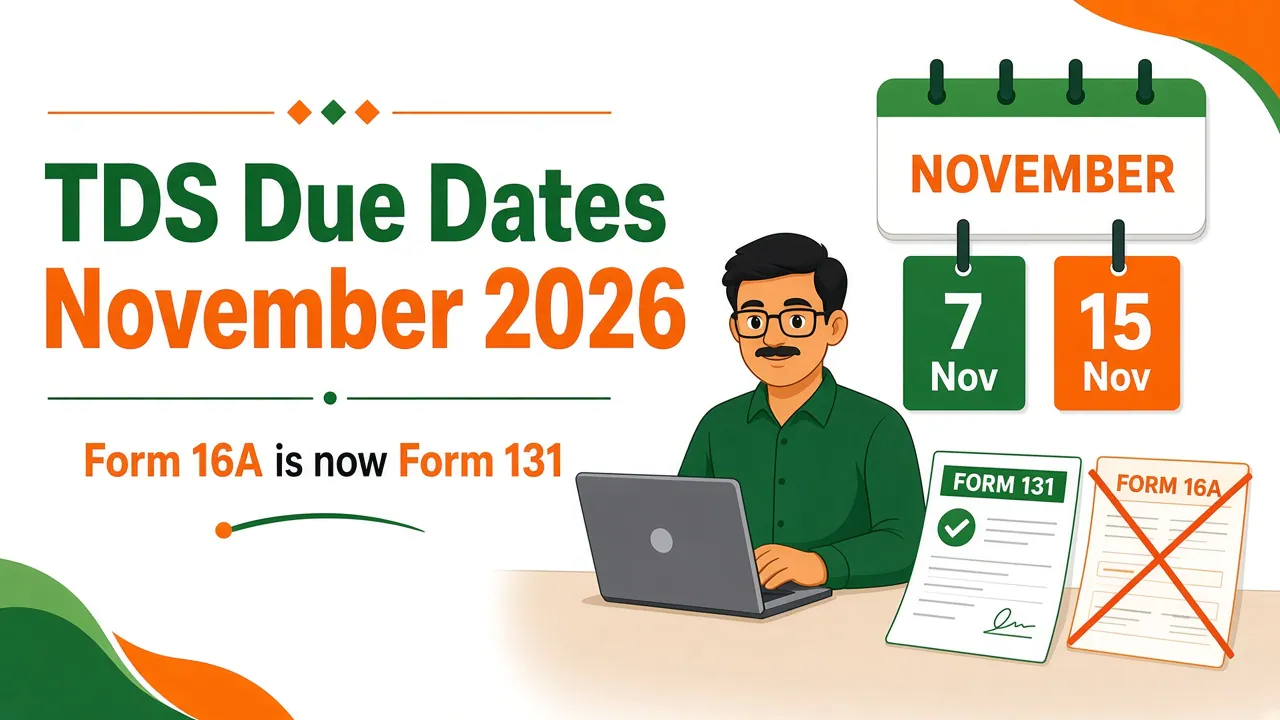
For an ordinary non-government deductor, TDS deducted in November 2026 is generally payable by 7 December 2026. That monthly rule is useful, but government payments, March deductions and specified transaction-wise forms need their own calendar.
This planning guide was reviewed on 22 November 2026. It uses the current Rule 218 framework for Tax Year 2026–27 and explains where an old-period payment needs separate treatment.
The ordinary non-government calendar
| Deduction month | Ordinary deposit deadline |
|---|---|
| October 2026 | 7 November 2026 — already passed at this review. |
| November 2026 | 7 December 2026. |
| December 2026 | 7 January 2027. |
| January 2027 | 7 February 2027. |
| February 2027 | 7 March 2027. |
| March 2027 | 30 April 2027. |
These are deposit dates, not quarterly-statement dates. A statement due in January does not postpone the earlier payment of November's deduction.
Set an internal date before the legal deadline and confirm successful payment. A prepared challan or pending transaction is not remittance.
Identify exceptions before filling the tracker
Government book-adjustment payments generally use the same-day rule. Government payments with a challan generally follow seven days after month-end, including March; they do not acquire an ordinary non-government 30 April concession.
Specified property, rent and other transaction-wise challan-cum-statement categories generally have their own 30-day period after month-end, subject to the relevant entry and rules. Current specified cases use Form 141; saved periods have the corresponding old forms.
A quarterly-payment arrangement is not a free choice for every deductor. Check whether the prescribed approval and conditions exist before using it.
Choose the Act from the underlying obligation
FY 2025–26 and earlier saved deductions remain under the 1961 Act and its rules. Current Tax Year 2026–27 uses the 2025 Act. An old deduction paid late in November is not automatically a current-year deduction.
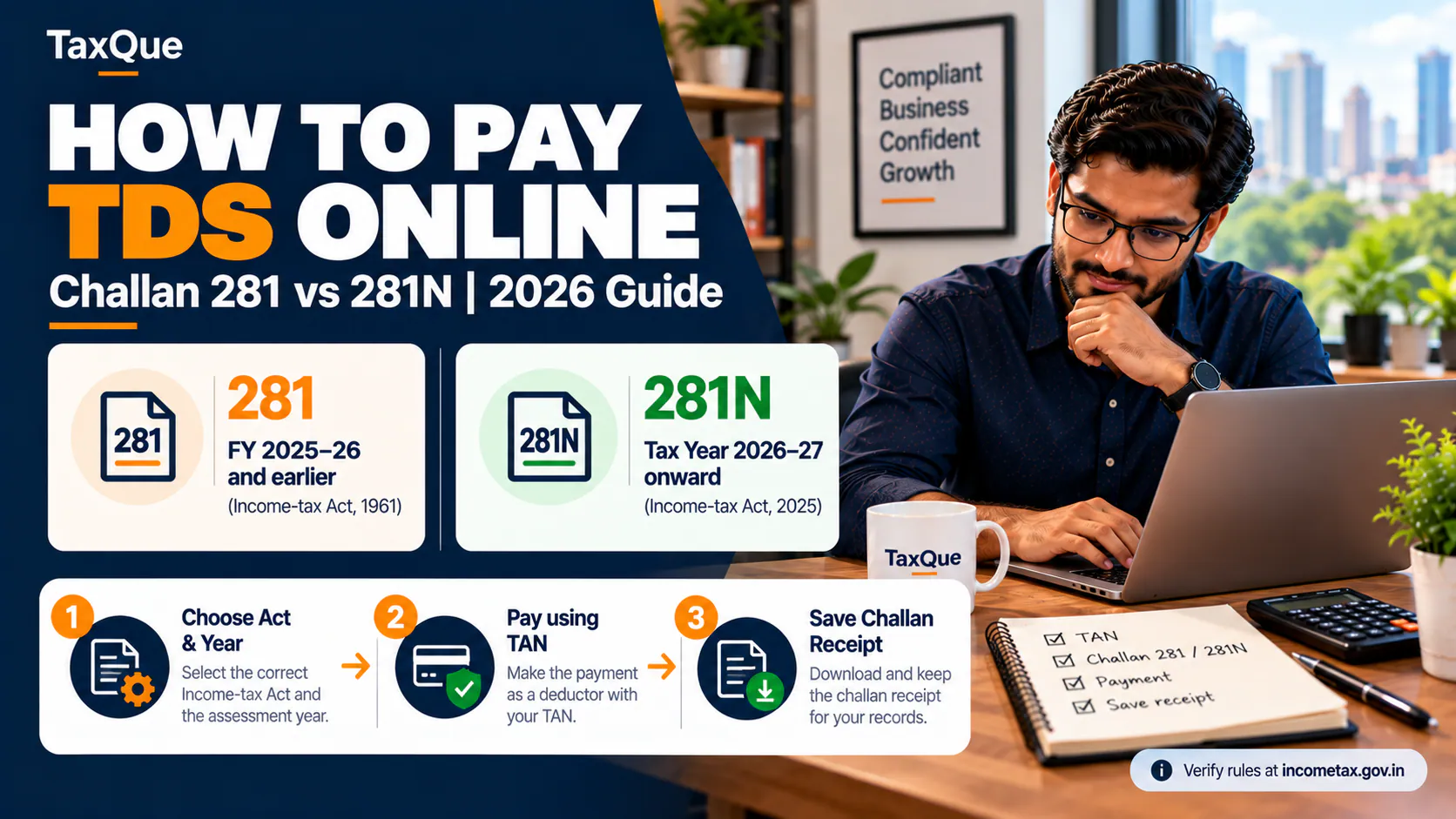
The department identifies ITNS 281 for old-Act payments and ITNS 281N for the current-Act framework. Official TAN-payment FAQ Official ↗.
Put the Act, period, TAN, payment category, amount and statutory date in the tracker. Retain the successful challan and the reference used for statement allocation.
Count late-payment interest correctly
Failure to deduct and failure to pay after deduction are different defaults. Under the current framework, section 398 addresses the consequences. Relevant deposit-default interest is generally 1.5% for each month or part of a month from deduction to actual payment; failure-to-deduct interest has its own 1% computation and period.
For example, assume ₹10,000 was correctly deducted on 15 January 2027, was ordinarily due on 7 February and remained unpaid until 15 March 2027. The deduction-to-payment period touches January, February and March. At 1.5% for each such month, the illustrative interest is ₹450, not ₹300 based only on two elapsed anniversary months. Check the actual dates and any other default before using the calculation.
Do not assume a weekend, bank holiday or portal outage automatically changes the statutory date. Retain evidence of a problem, but apply only a legally available extension or relief.
Payment does not complete the quarter
After deposit, reconcile recipient-wise deductions and challan allocation in the applicable statement. Current ordinary TDS reporting uses Forms 138, 140 or 144, depending on the category. Certificates have separate requirements and timing.
A late-statement fee is not the same as deposit interest. Current section 427 governs the relevant statement fee; do not describe it as a universal ₹1 lakh cap or mix it with a separate penalty provision. Saved periods require their own old-law references and calculations.
A monthly close that catches omissions
Compare payroll and vendor ledgers with the deduction register, including relevant year-end credits. Identify corrections and unallocated payments before creating another challan. Check the final portal status after payment and preserve a separate record of any failure or duplicate.
The preparer and reviewer should be able to trace each payment from the ledger to its statement row. Contact TaxQue with the deduction month and transaction type for a scoped reconciliation.