This article explains the FY 2025–26 TDS changes using the saved Income-tax Act, 1961 references. For transactions governed by the law from 1 April 2026, use the Income-tax Act, 2025 framework instead; the old 194-series labels are historical cross-references, not the current reporting entries.
Reviewed on 22 November 2026. A rate chart is a starting point: payer status, residence, thresholds, timing, exceptions and certificates can change the result.
Important FY 2025–26 changes
Several thresholds increased from 1 April 2025. The tax-free limit for the recipient did not necessarily increase by the same amount: a TDS threshold decides collection at source, not the final tax liability.
| Saved 1961 Act provision | FY 2025–26 point to check |
|---|---|
| 194A: interest other than securities | Covered bank/co-operative-bank/notified post-office interest: ₹50,000, or ₹1 lakh for resident senior citizens; other covered cases: ₹10,000. Ordinary rate 10%. |
| 194H: commission/brokerage | ₹20,000 annual threshold; ordinary rate 2%, subject to payer and payment conditions. |
| 194-I: specified payer's rent | ₹50,000 per month or part of a month; 2% for plant/machinery/equipment and 10% for land/building/furniture/fittings. |
| 194J: professional/technical categories | ₹50,000 for the relevant covered annual categories; 2% or 10% depends on the payment. Director remuneration has a separate no-threshold position under the entry. |
| 194T: firm-to-partner payments | 10% on covered remuneration, commission, bonus or interest when the ₹20,000 annual condition is crossed. |
The department's threshold reference Official ↗ and relevant statutory provisions should be read together. Do not assume every person making one of these payments is a covered payer.
Rates and thresholds are different settings
A ₹50,000 professional-fee threshold does not mean tax is always deducted only from the excess over ₹50,000. Conversely, the goods-purchase provision has its own excess-over-threshold computation. Check the exact base rather than using one formula for every section.
The contractor rates distinguish an individual/HUF recipient from other recipients. The payer's own constitution is a separate applicability question. For salary, calculate the applicable annual tax and deduction method rather than applying one fixed TDS percentage to every employee.
Firm-to-partner reporting also needs the correct classification. Credit to a capital account can be relevant for a covered payment; do not treat all partner drawings or return of capital as remuneration simply because money moves to the partner.
PAN and non-filer rules need precise wording
Section 206AB was omitted from 1 April 2025. That specific change should not be described as abolition of every rule that refers to filing history.
The PAN-related higher-deduction framework still requires separate assessment, and its exceptions matter. It is wrong to apply a universal “20% without PAN” rate to every category: some entries have different prescribed treatment, and certain non-resident cases have documentation-based exceptions.
Department's explanation of sections 206AA/206AB and their exceptions Official ↗.
From April 2026: use the new legal reference
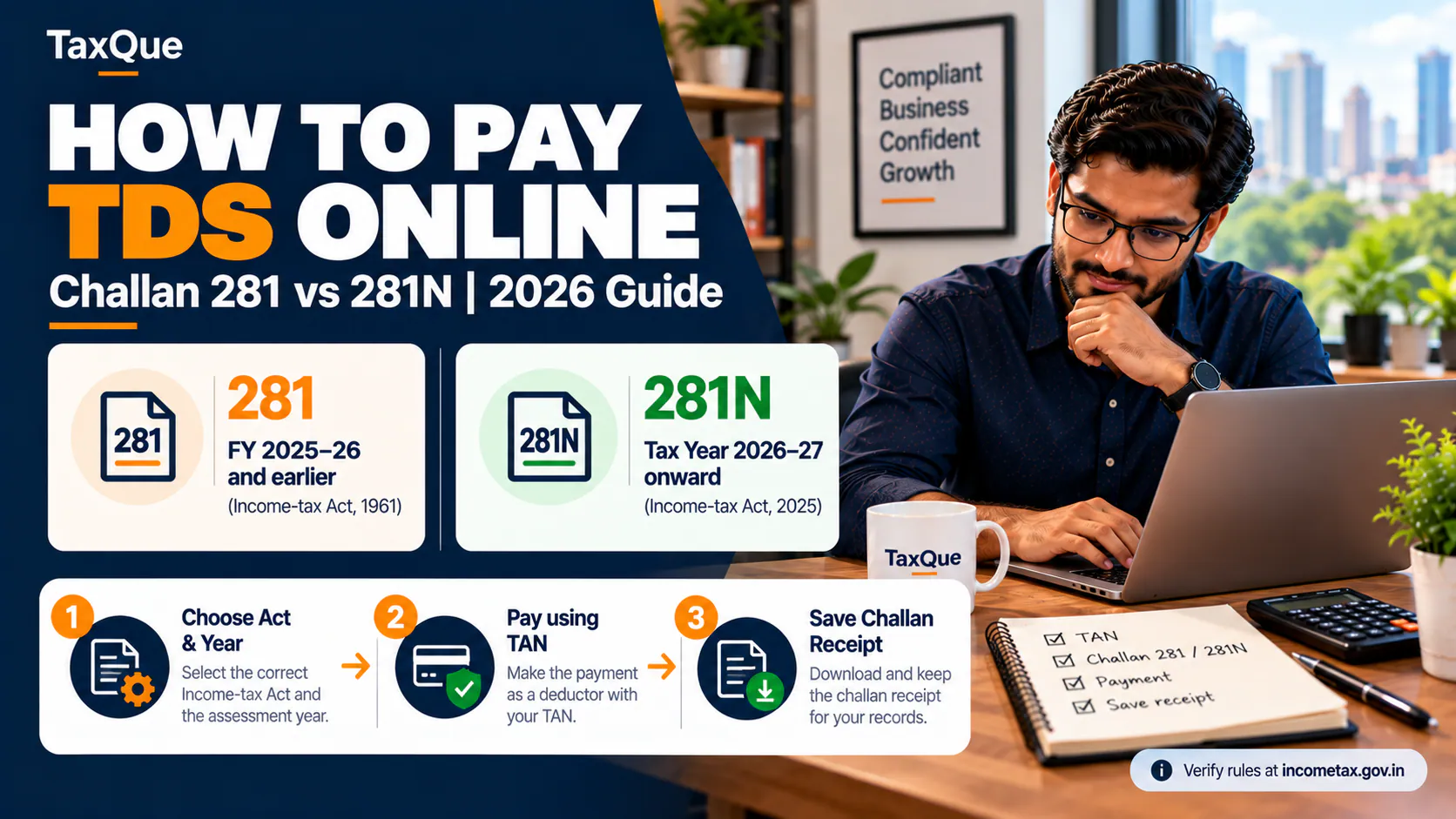
Current salary withholding is in section 392. Other TDS categories are consolidated in section 393, with different tables for residents, non-residents and specified payments to any person. TCS is in section 394.
Use the department's current Tax Year 2026–27 rates Official ↗ and the actual entry's conditions. A familiar percentage does not justify reporting under an obsolete section or statement number.
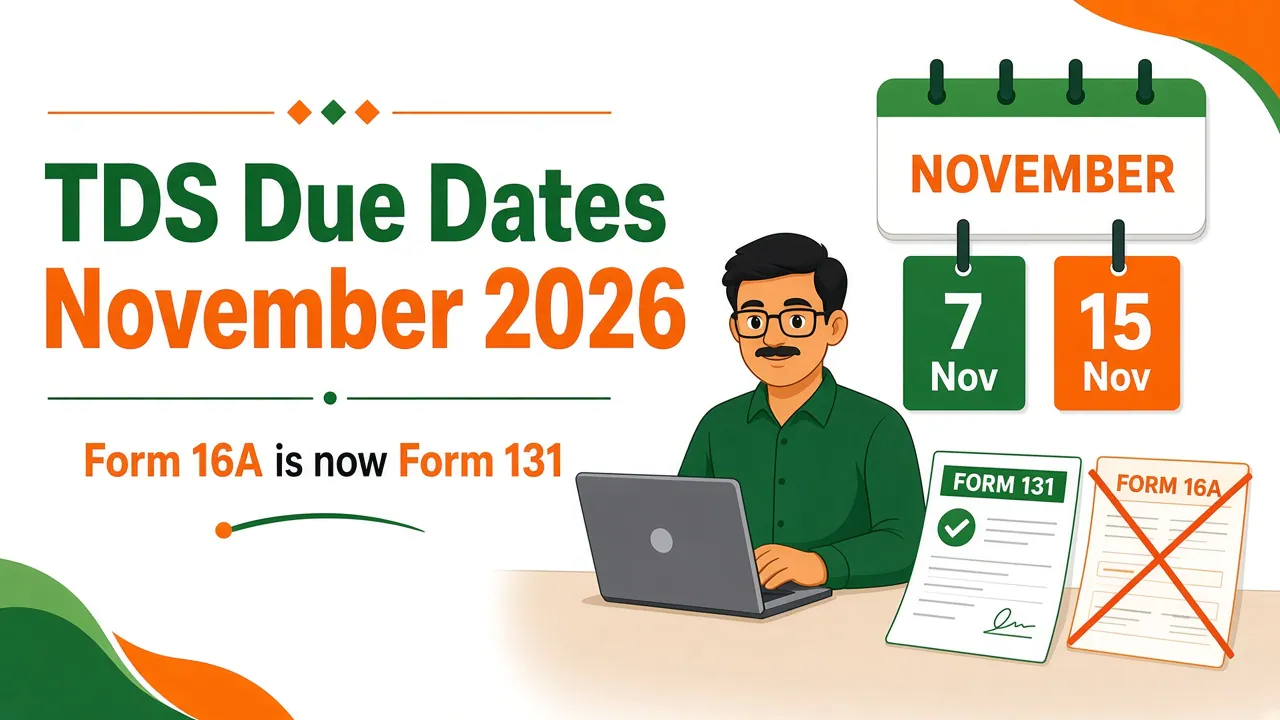
For ordinary current quarterly reporting, salary uses Form 138, resident non-salary Form 140, and non-resident Form 144. Saved FY 2025–26 statements and corrections retain their applicable old forms. Current payments use the relevant new-Act payment route; saved old-law payments use the corresponding old route.
A practical rate-master review
Keep separate columns for payment description, governing Act, payer/payee category, threshold period, tax base, rate, trigger and source date. Test the master with a full-year interest total, a variable monthly rent and a contractor whose aggregate payments cross the annual condition.
For overseas payments, establish chargeability and any treaty entitlement before using a rate. Do not copy one illustrative royalty percentage onto every non-resident invoice.
Reconcile the resulting deduction to its deposit, statement and certificate. A correct percentage alone does not make the reporting complete. Contact TaxQue with the period and payment facts for a scoped check.