
GSTR-10 Final Return Filing
Check whether your cancelled GSTIN must file GSTR-10: Mandatory statutory filing within 3 months of cancellation order date under Section 45 of the CGST Act.
Reconcile closing stock, capital goods and final tax liability: Accurately compute and reverse ITC liabilities on unsold inventory and capital assets to obtain complete legal closure.
Statutory due date is generally three months; verify the case and notices: Avoid recurring daily penalty notices (late fee ₹200 per day, capped at ₹10,000) with full department sign-off.
Get Free Expert Consultation
No commitment · Callback within 24 hrs
Plan for GSTR-10 Final Return Filing
One plan available
GSTR-10 Final Return Filing
Has your GST registration been cancelled? We help prepare and file your GSTR-10 final return using the details you provide, and share the filing acknowledgement once it's submitted.
WHAT'S INCLUDED
5 benefits- ✓Check cancelled GSTIN status and GSTR-10 filing deadline
- ✓Update correspondence details in the final return, if needed
- ✓Prepare GSTR-10 using customer-provided tax and stock details
- ✓Submit one final return through the GST portal
- ✓Share filed GSTR-10 copy and acknowledgement number
GSTR-10 Final Return Filing After GST Cancellation
Check the final-return requirement when a GST registration is cancelled. TaxQue helps review the cancellation record, applicable filing requirement and information needed for the final return. Share the cancellation order, effective date, periodic-return status and closing-stock records when enquiring.
GSTR-10 is different from an annual return and does not replace outstanding periodic returns or settle every liability. Confirm the return period, stock and credit review and filing work included. Applicability, the due date and current portal requirements must be checked against the particular cancellation and relevant rules.
What is GSTR-10 Final Return Filing?
GSTR-10 is the final GST return required for a person whose registration has been cancelled, where section 45 applies. It reports details of closing stock, inputs, capital goods and tax liability as of the relevant date. The statutory deadline is generally three months from the date of cancellation or the cancellation order, whichever is later.
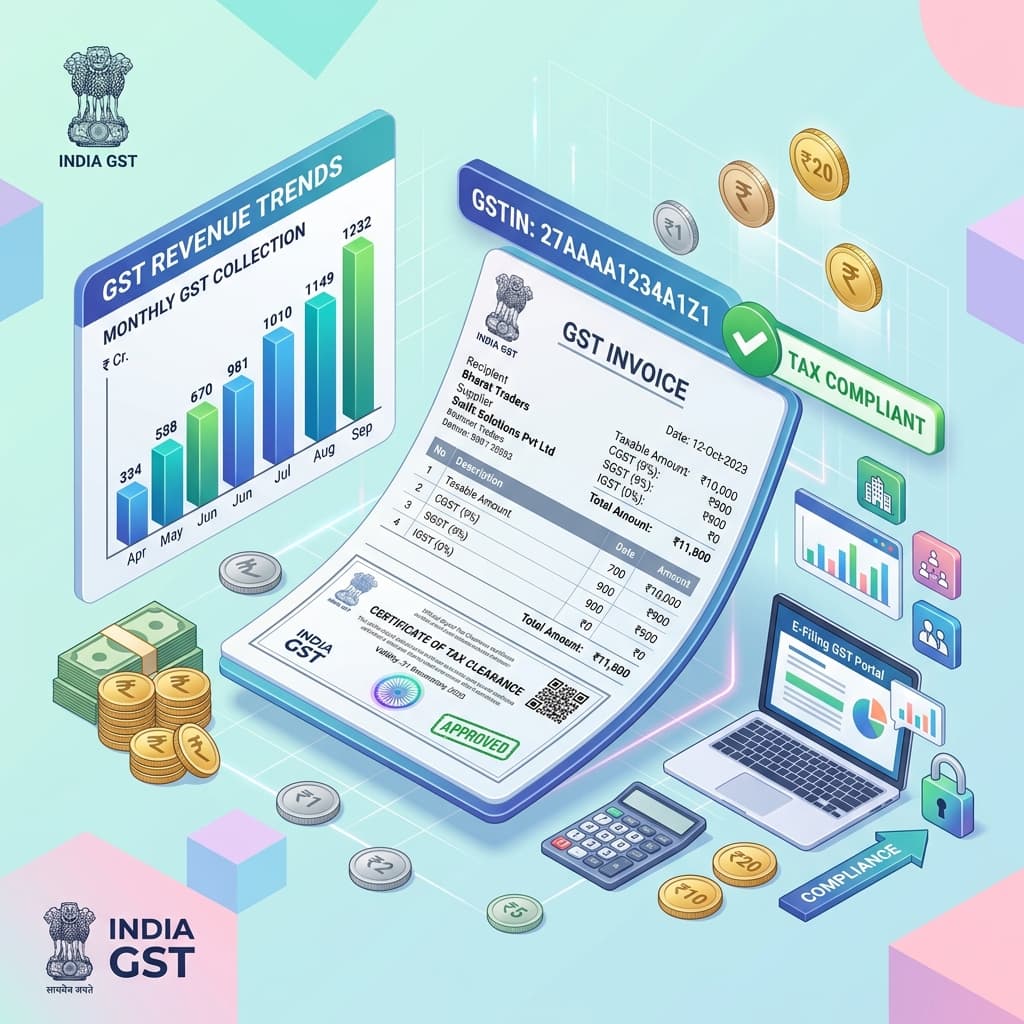
Review the cancellation details: Check the taxpayer category, cancellation order and relevant dates before deciding whether GSTR-10 applies.
Prepare closing-stock information: Review the records and applicable liability treatment for stock and capital goods rather than assuming no tax remains.
Separate final and pending returns: Identify outstanding periodic returns and payments separately and retain the final-return acknowledgement after filing.
Verify the three-month due date and taxpayer applicability
The deadline is generally measured from cancellation or the cancellation order, whichever is later; notified extensions and statutory exclusions may change applicability. Check the GSTIN-specific portal return tile and latest official instructions.
How to Get Started
Step 01
Confirm applicability and due date
Check the cancellation order, effective date, taxpayer category, pending returns and any government extension or exemption.
- 1Confirm the relevant GSTIN and whether GSTR-10 is enabled on the current Returns Dashboard.
- 2Calculate the three-month deadline from cancellation date or cancellation order, whichever is later.
Step 02
Reconcile closing stock and liability
Prepare the final stock and tax computation from books, purchase records and ITC records.
- 1Identify inputs, inputs in semi-finished or finished goods, and capital goods held on the applicable date.
- 2Reconcile tax payable, input tax credit reversal or repayment, payments and return records.
Step 03
File GSTR-10 and retain evidence
Review return values, submit and file through the GST Portal using the authorised signatory.
- 1Pay any liability shown as payable before filing, and retain the filed return and ARN/acknowledgement.
- 2Resolve portal errors and track any notice or subsequent compliance that remains due.
Documents Required for GSTR-10 Final Return Filing
Prepare source records that reconcile to the closing-stock and liability fields requested in the live GSTR-10 form. Keep the cancellation order, portal return history and payment proof available.
| Information group | Examples | Preparation note |
|---|---|---|
| Cancellation and registration | GSTIN, cancellation order, effective cancellation date and portal status. | Use the dates and reason shown in the official order. |
| Closing stock | Inventory listing, purchase invoices and stock valuation as of the applicable date. | Separate inputs and inputs contained in semi-finished or finished goods. |
| Capital goods and ITC | Fixed-asset register, purchase invoices, input tax credit records and prior reversals. | Reconcile credit and tax calculations with books and GST returns. |
| Tax and payment records | Outstanding return, liability, challan and electronic cash/credit ledger details. | Identify tax payable and pay portal-validated amount before filing. |
| Return reconciliations | Filed GSTR-1, GSTR-3B and relevant purchase/stock schedules for the final period. | Resolve mismatches before submitting the final return. |
GSTR-10 Statutory Due Date and Filing Steps
File the final return generally within three months of the cancellation date or the cancellation order date, whichever is later. Government extensions or taxpayer-category exceptions can affect the requirement. Confirm the portal due date and any official extension for the GSTIN.
| Milestone | What determines it | Important note |
|---|---|---|
| Statutory due date | Generally three months from the date of cancellation or the date of the cancellation order, whichever is later. | Section 45 CGST Act; check the order, applicability and any notified extension. |
| Portal return tile | The GST Portal displays the available return period, status and due date for the selected GSTIN. | A portal status message does not replace checking applicable statutory exemptions or extensions. |
| Tax/payment before filing | Pay any tax liability shown by reconciliation and the return before filing. | Preserve challan and ledger evidence. |
| After filing | Download filed GSTR-10 and acknowledgement; continue to resolve any open liabilities or notices. | Check that filing status is successful and retain records. |
| Late filing | Late fee or other consequences may apply under current rules if filed after the deadline. | Verify live calculation and any notified relief before payment. |
Who Must File GSTR-10
GSTR-10 generally applies to a registered person required to file a return under section 39(1) whose GST registration has been cancelled, subject to exemptions and taxpayer-category rules. Check the GST Portal return tile, cancellation record and current official guidance for the specific GSTIN.
Why Choose GSTR-10 Final Return Filing
Organised final-return preparation helps ensure cancellation dates, closing stock and tax payable are reconciled before online submission.
Due date and applicability check
We verify the cancellation order, three-month period, portal return status and any notified extension.
Closing stock and liability reconciliation
We review the inventory, capital goods, ITC and payment records used to prepare the final return.
Reviewable filing and acknowledgement
We share the draft for approval and provide the filed return and portal acknowledgement after authorised filing.
GSTR-10 Applicability Checklist
GSTR-10 is generally required for a person required to furnish a section 39(1) return whose registration has been cancelled, subject to statutory exclusions and current portal rules. Confirm the taxpayer category and GSTIN-specific return tile.
1Check these points before filing
- Registration is cancelled or surrendered and the person is required to furnish the final return under section 45.
- Check whether an exclusion applies, including taxpayer categories that are not required to furnish returns under section 39(1).
- Reconcile closing stock, capital goods, tax/ITC liability, pending returns and effective cancellation date before submission.
GSTR-10 Preparation and Filing: What You Can Review
A final return is a GST statutory filing after cancellation where applicable. TaxQue prepares the reconciliation and portal return for review; the taxpayer remains responsible for complete data and authorised filing.
| Service element | TaxQue process | What the client can verify |
|---|---|---|
| Applicability and dates | Check cancellation order, category, due date and portal return status. | A deadline calculation and applicability checklist. |
| Stock and ITC | Reconcile stock, capital goods and credit from books and purchase records. | Draft calculations with source-record references. |
| Tax payable | Review liability, payment and ledger position before filing. | Tax computation and challan/ledger confirmation. |
| Submission record | File after client review using authorised portal credentials and signature. | Filed return, ARN and acknowledgement. |
GSTR-10 Final Return Service Features
Closing-stock reconciliation, due-date tracking and accurate portal filing support for an applicable final GST return.
Cancellation date and deadline check
Confirm applicability and due date against section 45, cancellation record and official portal.
Stock and liability computation
Reconcile stock, capital goods, ITC and tax payable using supporting books and GST records.
Portal submission and acknowledgement
Prepare a reviewable return, coordinate authorised filing and share the filed return evidence.
Frequently Asked Questions
Quick answers about GSTR-10 Final Return Filing
GSTR-10 is the Final Return mandated under Section 45 of the CGST Act for any taxpayer whose GST registration has been cancelled or surrendered. It must be filed once after the cancellation order is passed to declare closing stock and finalize tax dues. It is not required for input service distributors or composition dealers.
Under Section 45, GSTR-10 must be filed within 3 months from the date of cancellation or date of the cancellation order, whichever is later. Missing this 3-month window triggers hefty daily government late fees.
If GSTR-10 is not filed within 3 months, the tax officer issues a mandatory notice in Form GSTR-3A under Section 46. If you still fail to file within 15 days of notice, the officer will pass a Best Judgment assessment order, attach bank accounts, and levy daily late fees up to ₹10,000.
Under Section 29(5) of the CGST Act, on cancellation of registration, the business must pay an amount equal to the Input Tax Credit (ITC) availed on closing stock of raw materials, semi-finished goods, finished goods, and capital goods, or the output tax payable on such goods, whichever is higher. Our CAs calculate the exact stock reversal to prevent overpayment.
No. The GST portal does not allow GSTR-10 submission until all periodic returns up to the effective date of cancellation are fully filed. TaxQue reconciles and files any overdue return backlogs first before executing your final GSTR-10 filing.
What Our Clients Say
Real experiences from 500+ businesses and individuals who trust TaxQue across India.
Ramesh Agarwal
1y ago
Excellent GST Service
TaxQue handled our entire GST compliance smoothly. The team was responsive and very professional. Absolutely recommend to any business owner!
Priya Sharma
2y ago
Hassle-free ITR Filing
Filing ITR used to be stressful. TaxQue made it effortless. Fast, accurate, and very affordable. I have been using their service for 3 years now.
Vikram Mehta
2y ago
Company Registered in 5 Days!
Best CA team I've ever worked with. Company registration was done in just 5 days. The process was smooth and they kept me updated at every step.