
Verified for 27 October 2026. The DGFT government fee for a new Importer-Exporter Code (IEC) is ₹500. Annual IEC confirmation during 1 April–30 June costs ₹0; an annual update after the prescribed window is listed at ₹200 in Appendix 2K. These are government charges, not a consultant's fee. Always check the amount shown on the official payment screen before paying.
If you are starting an import-export business, you do not need an expensive “IEC licence package” simply to obtain the government code. The Directorate General of Foreign Trade (DGFT) Official ↗ issues IEC online. The main questions are what you actually pay, whether you must pay again next year, and what can delay your application.
IEC registration fees in 2026: quick answer
| Transaction | Official DGFT fee | What it means |
|---|---|---|
New IEC application | ₹500 | One-time application fee |
Annual confirmation/update, April–June | ₹0 | Required every year, even with no changes |
Annual update after the prescribed period | ₹200 | Late annual-updation user charge |
Professional assistance | Not fixed by DGFT | Optional, quoted by your service provider |
Restricted goods authorisation | Separate fee | Depends on the authorisation and DGFT schedule |
The amounts for new IEC and annual updation should be checked against DGFT Appendix 2K Official ↗. A separate modification, licence or certificate can attract another applicable fee; do not assume every service costs ₹200.
What is IEC, and who needs one?
An IEC is a PAN-linked, 10-character importer-exporter identifier issued by DGFT. Most commercial imports and exports of goods require it, subject to specific exemptions. Some service exporters may need IEC when claiming benefits under the Foreign Trade Policy (FTP), even though not every cross-border service transaction requires one.
One PAN generally gets one IEC, covering the applicant's branches and units. You do not obtain a second IEC each time you open a branch.
If your firm already has an IEC, use the portal's View IEC Related Details facility before filing a new application. An avoidable duplicate application wastes time and may create a payment issue.
What does the ₹500 government fee include?
The ₹500 is for submitting the new IEC application on the official DGFT portal. Once the application is successfully completed and validated, an electronic IEC can be downloaded from the account dashboard.
It is not a fee for:
- preparing or correcting PAN, address or bank documents;
- obtaining a Digital Signature Certificate, if you use a DSC;
- engaging an agent or consultant;
- a separate licence for restricted imports, exports or SCOMET goods;
- customs clearance, freight, GST or certificate-of-origin services.
There is also no general annual IEC certificate-renewal fee. IEC ordinarily has permanent validity unless suspended, cancelled or deactivated under applicable rules. That permanent validity does not remove the obligation to check its details annually.
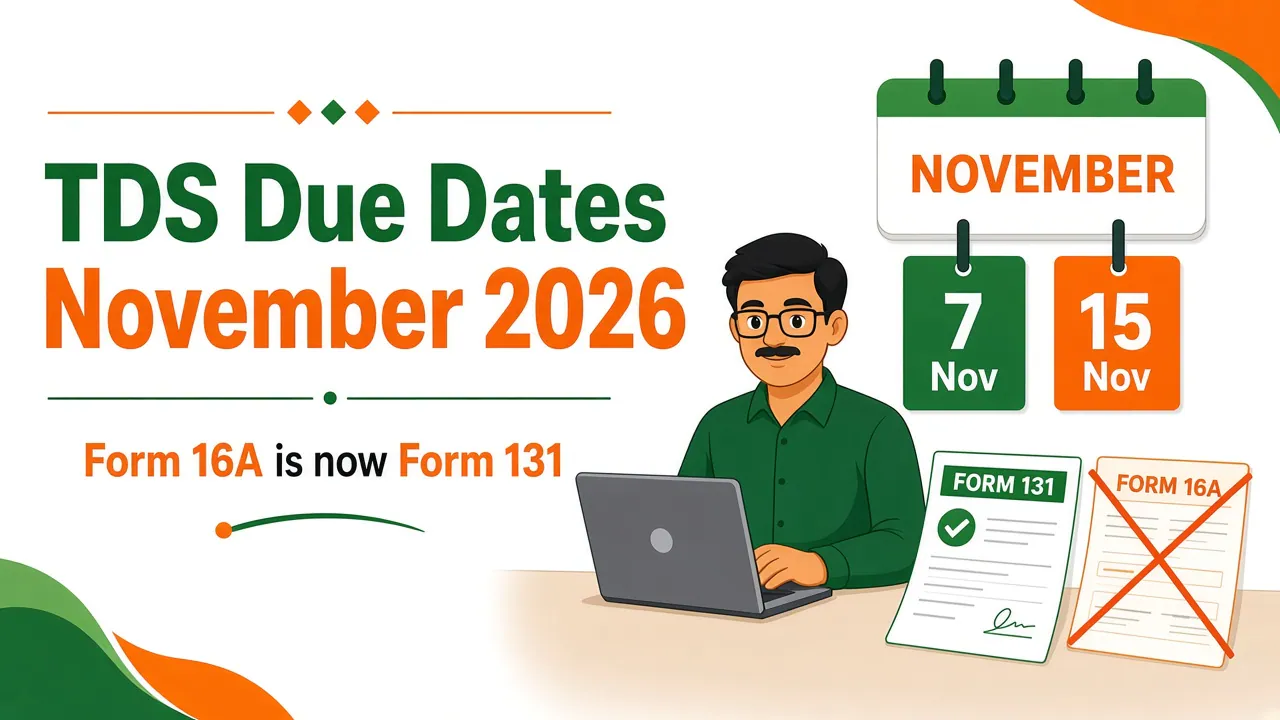
Annual IEC update: free before 30 June, ₹200 after
Paragraph 2.05 of the Foreign Trade Policy 2023 Official ↗ requires every IEC holder to update or confirm details between April and June each year—even if nothing has changed.
How to complete the annual IEC update
-
Sign in
Open dgft.gov.in and log in to the IEC-linked account.
-
Open IEC services
Select the IEC management or modification/annual-update workflow shown on the portal.
-
Review details
Confirm the legal name, address, contact information, constitution and bank details.
-
Submit confirmation
Make corrections if necessary, complete the prescribed authentication, and save the acknowledgement.
-
Check status
Confirm that the IEC is active and the annual update was accepted.
Example: A trader confirms an unchanged IEC on 15 May 2026. The annual-confirmation fee under Appendix 2K is ₹0. If the same annual update is filed after 30 June, the schedule lists a ₹200 user charge.
Missing the window can cause IEC deactivation. DGFT allows a deactivated IEC to be activated following successful updation, subject to any other compliance issues. Deactivation is not the same thing as permanent cancellation, and the ₹200 scheduled user charge should not automatically be called a statutory penalty.
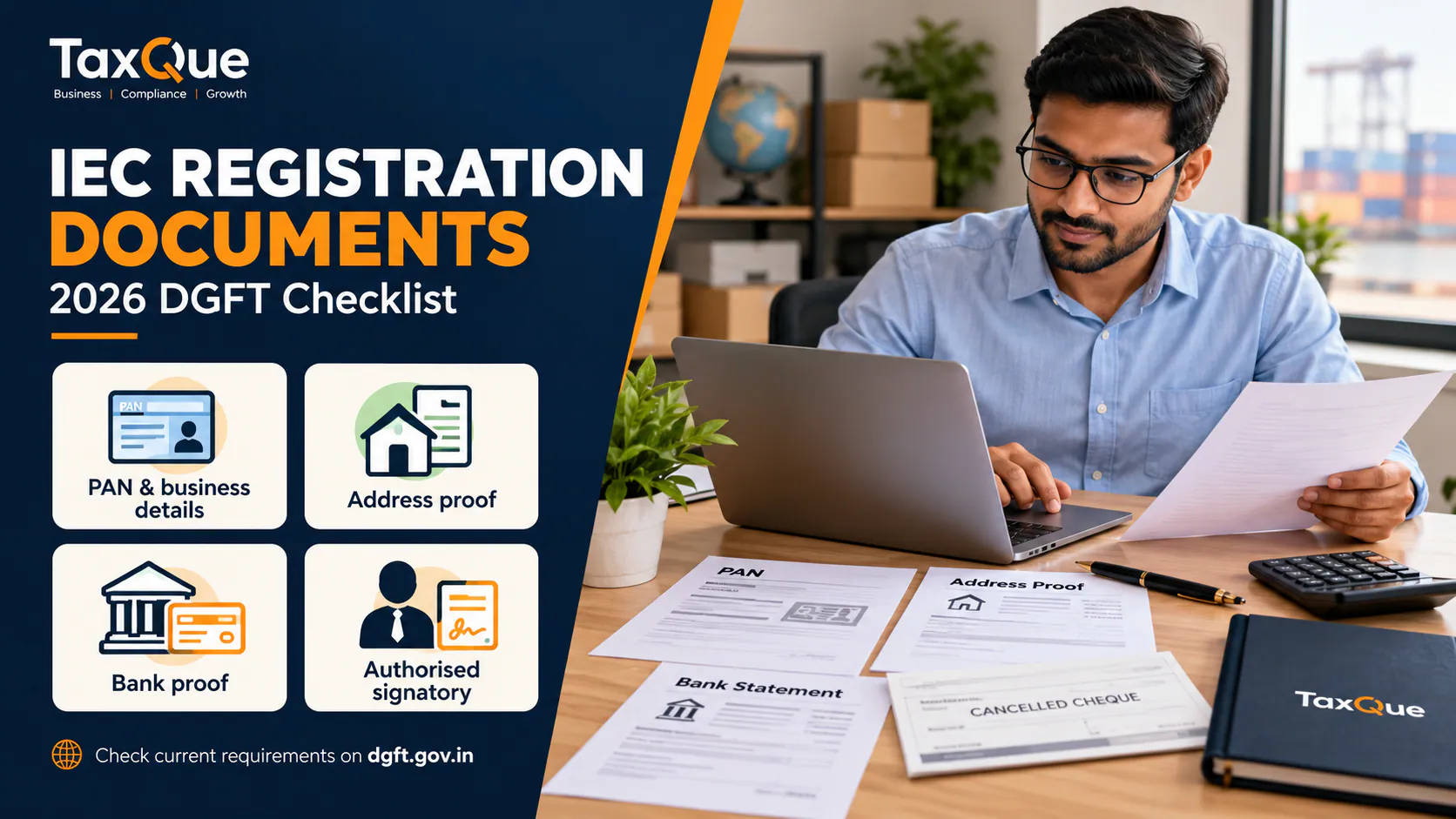
Documents and bank verification in 2026
The updated DGFT Handbook of Procedures, Chapter 2 Official ↗, paragraph 2.08, provides for online ANF-2A filing and electronic validation of application information. The core supporting documents, unless the system specifically exempts upload, are:
| Document or detail | What to check |
|---|---|
| Applicant PAN and legal name | Match Income Tax and registration records |
| Business address proof | Current, readable, and consistent with the application |
| Bank proof | Cancelled cheque with the entity's pre-printed name or prescribed bank certificate |
| Signatory and contacts | Correct authorised person, accessible mobile and email |
| Entity proof | Keep incorporation or constitution records ready where relevant |
Important 2026 change: DGFT Trade Notice 23/2025-26 dated 6 February 2026 introduced NPCI-based validation of bank details. Applicants must declare relevant active PAN-linked bank accounts and make sure the PAN, account-holder name and bank information match.
DGFT's 2026 IEC user manual explains that IEC creation depends on successful bank validation. Validation time varies by bank; avoid any promise that an IEC is guaranteed within a few minutes. For a document-by-document checklist, see documents required for IEC registration.
How to apply for an IEC online
New IEC application on the DGFT portal
-
Register or sign in
Create or access your DGFT account using valid contact information.
-
Start ANF-2A
Choose the new IEC application service and enter your PAN-linked entity information.
-
Complete business details
Fill in address, proprietors/partners/directors or other authorised persons as applicable.
-
Enter and validate bank details
Provide the bank information and any evidence required by the live form.
-
Upload supporting proof
Follow the portal's current document prompts; some fields may be electronically verified.
-
Sign and pay ₹500
Use the available authentication method and official payment gateway.
-
Download the IEC
After successful validations, download the e-IEC and check its recorded status.
Do not pay on websites that imitate DGFT. Start at dgft.gov.in Official ↗ and save the application number and transaction receipt.
Total IEC cost: government vs professional charges
The actual total cost depends on whether you apply yourself or pay someone to review and file the documents. Professional charges are not prescribed by DGFT.
| Cost component | Self-filing | Filing with a professional |
|---|---|---|
DGFT new IEC application | ₹500 | ₹500 |
Professional assistance | ₹0 | As quoted |
Correcting deficient documents | If needed | If needed |
DSC or other optional setup | If needed | If needed |
Applicable taxes on services | Not relevant to self-filing | As invoiced, if applicable |
Illustration, not a TaxQue price quotation: If a service provider charges ₹1,500 for assistance, the subtotal would be ₹500 government fee + ₹1,500 professional fee = ₹2,000, before any applicable tax on the professional service. Ask whether query handling, bank-validation issues and post-filing support are included.
TaxQue's IEC registration service can help with document checks and filing; request a written quote showing statutory fees separately.
IEC fee versus an import/export licence fee
IEC identifies your business. It does not automatically authorise every product.
Goods classified as restricted under the ITC(HS) policy may need a separate DGFT authorisation, and SCOMET or sector-regulated items may have additional requirements. Their fees depend on the relevant application and current Appendix 2K entry, not the basic ₹500 IEC fee.
For this distinction, see import-export licence fees and restricted-goods costs.
Common mistakes that cost time or money
- Paying a fake “IEC renewal fee”: distinguish annual confirmation from separate professional service.
- Missing the April–June update: plan a yearly reminder even if no business details changed.
- Bank-name mismatch: check PAN, entity name, account holder and supporting evidence before payment.
- Applying for a second IEC under the same PAN: check existing IEC records first.
- Assuming the ₹500 covers restricted goods: verify your ITC(HS) code and product-specific rules.
- Relying on instant-approval promises: current bank validation may delay issuance.
Checklist before paying
- ○ Check that an IEC does not already exist against your PAN
- ○ Verify the legal name, constitution and address
- ○ Confirm active bank details and NPCI validation readiness
- ○ Keep address proof and the prescribed bank document ready
- ○ Use only the official DGFT portal for the ₹500 application
- ○ Separate statutory fees from professional charges in your quote
- ○ Save your receipt, IEC PDF and annual-update acknowledgement
Official DGFT references
- Foreign Trade Policy 2023, paragraph 2.05 — IEC and annual updates Official ↗
- Handbook of Procedures, Chapter 2 (2026 consolidated publication) Official ↗
- Appendix 2K — application fees and user charges Official ↗
- DGFT Trade Notice 23/2025-26 — NPCI bank validation Official ↗
- DGFT IEC Module User Help File V4.1 Official ↗
Need help with IEC registration or annual updates?
TaxQue can review PAN, business-address and bank documents, explain the government fee and assist with a new application or update.
Get IEC Registration Assistance
Information date: 27 October 2026. DGFT fees, portal workflows and exemptions can change. The live portal and applicable published notifications govern a specific transaction. Professional charges are separate and should be quoted before work starts.