
A bakery owner opens FoSCoS to renew an FSSAI licence and sees new language about perpetual validity. Does that mean no renewal, no annual payment, and nothing else to file? Only the first part is generally true under the 2026 reform. The licence or registration can continue without a recurring renewal application, but annual fees, applicable returns and food-safety duties remain important.
Here is a practical way to check your own certificate and decide what to do next.
What changed in 2026?
The Food Safety and Standards (Licensing and Registration of Food Businesses) Amendment Regulations, 2026 replaced regulation 2.1.7 with a rule that a licence or registration remains valid unless it is suspended, cancelled or surrendered. FSSAI's 27 March 2026 FAQs say food business operators (FBOs) are no longer required to renew licences or registrations. The reform also introduced risk-based inspections, deemed registration for specified street food vendors, and revised turnover bands.
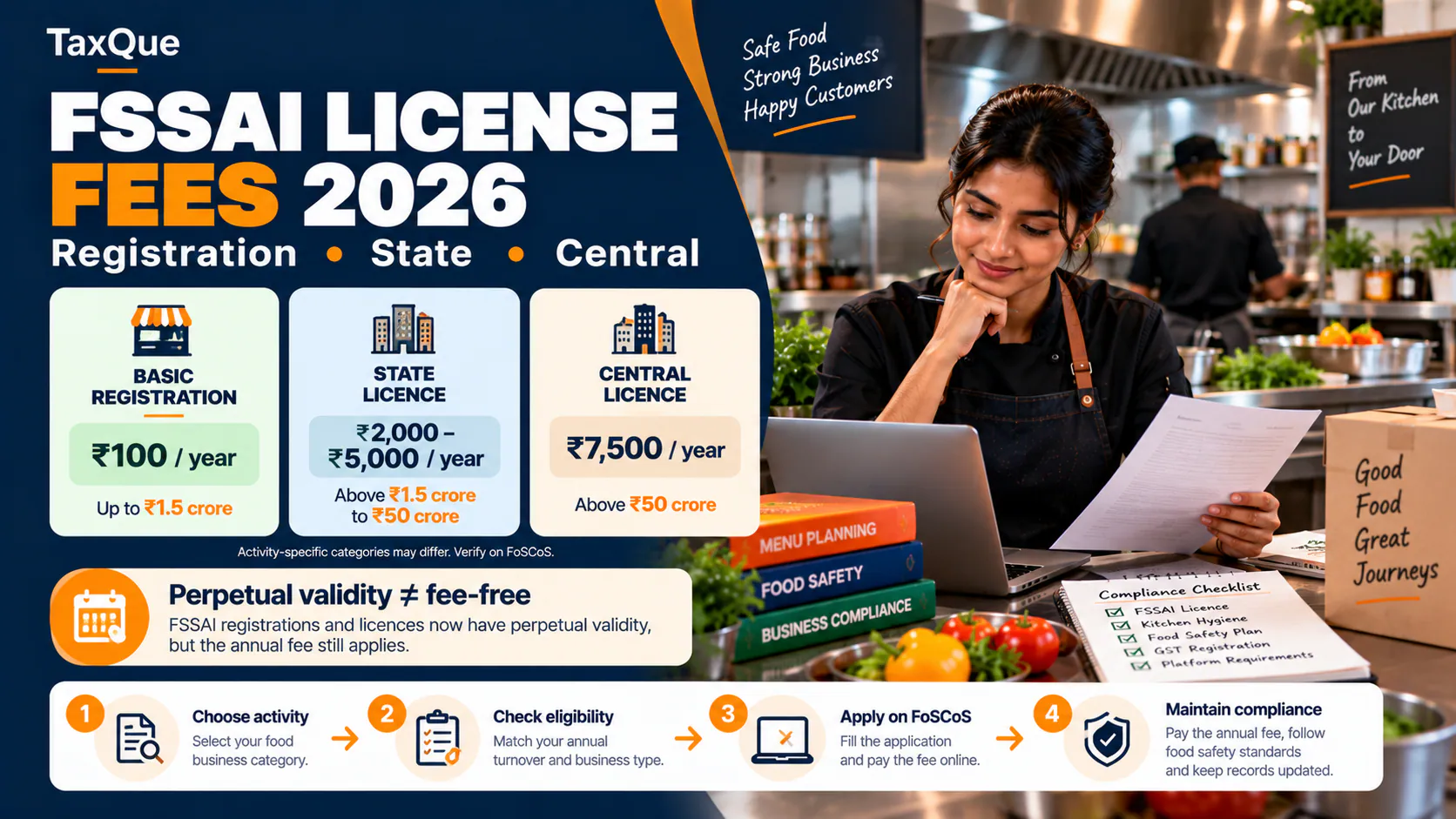
Perpetual is about validity, not exemption from compliance. The amended regulation provides for deemed suspension if an FBO fails to pay the annual licence or registration fee specified by FSSAI, or fails to submit an applicable return by its due date. During suspension, it says the FBO must not carry on food business activity. Payment of the due annual fee or submission of the return with the due penalty, as applicable, is the route stated for lifting that suspension. Check the status in FoSCoS rather than assuming that a payment instantly changes the displayed certificate.
Do you need to renew your FSSAI licence in 2026?
| Your situation | What the official guidance says | Action to take |
|---|---|---|
Issued on or after 1 April 2026 | FSSAI expressly says the issued licence/registration has perpetual validity, including an earlier application still under processing on that date. | Check the active status, annual-fee coverage and any applicable return. Do not file a routine renewal merely because a prior system reminder appears. |
Issued before 1 April 2026 | The amended validity rule is broadly worded, but FSSAI's specific FAQ confirms post-1 April issuance and does not give a detailed conversion schedule for every older certificate. | Check the live FoSCoS record, fee period and official messages. Seek a portal or licensing-authority clarification if an old expiry field and new rule conflict. |
Suspended, cancelled or surrendered | Perpetual validity does not revive a certificate in one of these states. | Identify the reason and complete the proper compliance or authority process before operating. |
The March amendment and the 1 April 2026 turnover thresholds are related but separate changes. Do not use the threshold start date to assume that every existing licence automatically switched category or that an expired certificate has silently revived. The certificate status and current FoSCoS instructions matter.
No renewal application does not mean no annual fee
The new regulation explicitly refers to an annual licence fee or registration fee. FSSAI's FAQ says FBOs can choose to pay for any number of years at once, with payment possible at any time of the year. That flexibility is not a promise that leaving the fee unpaid has no consequence: the regulation links failure to pay a due annual fee to deemed suspension. Review the fee coverage and any due amount in your FoSCoS account and retain the receipt.
The FoSCoS fee structure can help identify the category-specific fee, but portal screens may still carry old “renewal” labels. Follow the operative 2026 regulations and FSSAI's latest orders if an older help page conflicts with them. Avoid paying a third party solely because it sends an expiry warning; verify the certificate and payment requirement on the official portal.
Which food businesses still file an annual return?
An annual return is not required from every FBO. FSSAI's annual-return guidance identifies manufacturers, including repackers and relabellers, importers and manufacturer-exporters as covered categories, with the return normally due by 31 May for the preceding financial year's activities. Check your licence's kind of business and any later FSSAI direction for your specific return obligation.
This matters more under perpetual validity: the amended regulation states that failing to file an applicable return by its due date can cause deemed suspension. A small retailer who is not required to file that return should not be told to file it simply because all licences now have perpetual validity. Food safety and hygiene obligations continue for both retailers and manufacturers.
New turnover thresholds from 1 April 2026
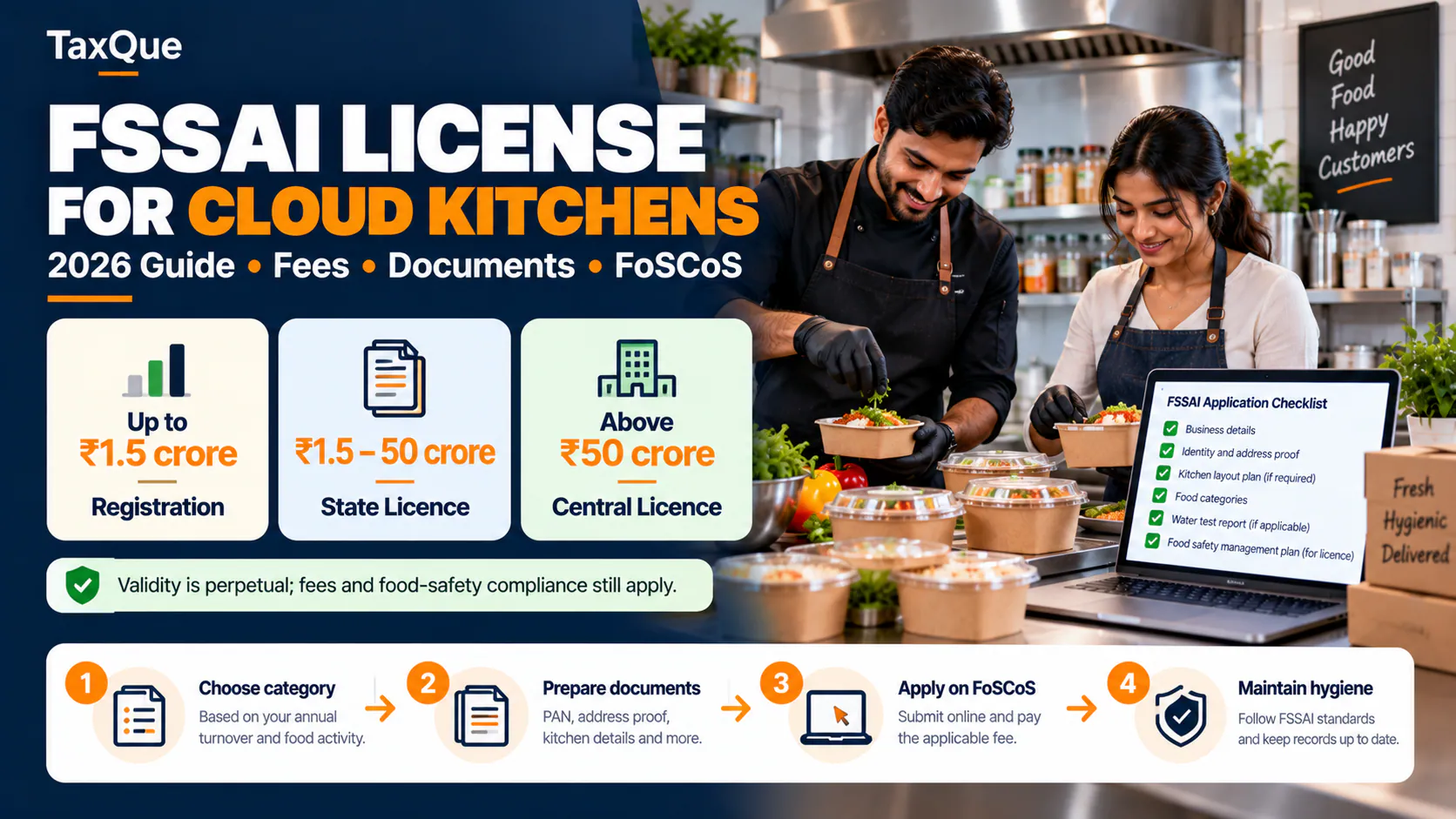
FSSAI's 13 March 2026 order and FAQs set these broad categories for new applications from 1 April 2026:
| Category | Annual turnover |
|---|---|
| Registration | Up to ₹1.5 crore |
| State licence | Above ₹1.5 crore and up to ₹50 crore |
| Central licence | Above ₹50 crore |
The earlier general registration limit was ₹12 lakh. If you already hold a State licence but now fall within the registration band, that does not mean you should surrender the licence immediately and make a fresh application. FSSAI says existing FBOs will be given time to migrate in FoSCoS. Check the correct kind-of-business eligibility and portal prompts before changing the category. FSSAI also says the 13 March order does not change the jurisdiction of licensing or registering authorities.
What happens to existing licence fees during migration?
FSSAI says there is no modification fee for migration caused by the revised turnover bands. A State-licence holder who becomes eligible for registration will have the already-paid fee adjusted against the annual registration fee. The FAQ says the licence or registration number does not change merely because of this category migration, and that the system handles migration based on the FBO's self-declarations without separate licensing-authority approval. Check your actual record and payment adjustment after the portal process.
For example, a food business with turnover of ₹80 lakh may fall in the registration turnover band, but it should verify its full eligibility and FoSCoS instructions before altering its current certificate. The turnover figure alone is not a substitute for checking the activity, category and live portal status.
Tatkal approvals and street vendors
FSSAI confirms the perpetual-validity reform and revised turnover thresholds also apply to Tatkal licences and registrations. A Tatkal approval is therefore not automatically outside the new validity framework.
The amended regulations also treat street food vendors, hawkers, food trucks, carts and similar food businesses registered under the Street Vendors (Protection of Livelihood and Regulation of Street Vending) Act, 2014 as deemed registered under the FSS Act. This is not a blanket exemption for every roadside seller. Such vendors must still comply with the applicable Schedule 4 hygiene and sanitary requirements, and should retain proof of their qualifying street-vendor registration.
What still needs attention after renewal disappears?
- Annual fees: check the covered period, payment amount and FoSCoS receipt.
- Returns where applicable: identify your kind of business and submit the required annual return by its due date.
- Changes to the business: use the existing modification procedure for relevant changes to the certificate, such as the premises or licensed activities. FSSAI's FAQ says modification applications continue under the existing procedure.
- Hygiene and inspections: maintain food-safety records and comply with applicable standards. The 2026 regulations introduce a risk-based inspection and audit framework; a compliant FBO may face fewer inspections, but no certificate is inspection-proof.
- Closure: the amended regulation requires the FBO to inform the authority within 30 days of business closure and surrender the certificate or licence. Fees already paid are not refunded on surrender.
Five-minute FoSCoS check
- Open the official FoSCoS portal and find your licence or registration.
- Confirm the number, issue date, current status, category and kind of business.
- Check the annual-fee coverage and download payment receipts.
- Determine whether your business must file a return; if so, note the due date and status.
- Compare annual turnover with the revised bands and follow any migration prompt, without assuming a category switch is already complete.
- Download the current certificate and resolve any mismatch, suspension or older expiry display with the licensing authority or FoSCoS support.
Need help checking your FSSAI record?
TaxQue can review your FoSCoS status, current category, annual-fee coverage and return obligations, then help with any modification or migration that is actually needed. Contact TaxQue with your licence number and kind of business so the advice matches your record.