CMP-08 is the quarterly statement-cum-challan used by applicable composition taxpayers to declare and pay self-assessed GST. It does not replace the separate annual GSTR-4 obligation.
The distinction matters for deadlines and late-filing consequences. An old article's ₹200-per-day calculation should not be copied from another return into CMP-08. Reviewed on 22 November 2026.
Check that composition applies to the quarter
Confirm the taxpayer's composition status and effective dates before preparing the statement. Eligibility depends on the applicable scheme, preceding-year turnover, state, activities and restrictions. The ordinary goods-composition ceiling and the separate eligible services scheme are different provisions.
Rates also differ by category. Do not describe services composition as 0.5%: the separate eligible services scheme generally has 6% total GST. Eligible trader/manufacturer categories ordinarily use a 1% total rate, while the qualifying restaurant category has its own 5% rate and conditions.
Composition taxpayers cannot collect GST separately from customers or claim ITC in the ordinary way. Keep the required bill-of-supply and accounting records. “Simpler compliance” does not mean no detailed transaction evidence is needed.
Ordinary CMP-08 calendar
| Quarter | Ordinary due date, unless validly extended |
|---|---|
| April–June | 18 July. |
| July–September | 18 October. |
| October–December | 18 January following that quarter. |
| January–March | 18 April following that quarter. |
Check the financial year and any official extension for the actual quarter. For an applicable quarter, filing is required even when there is no self-assessed liability; nil filing still has its conditions.
Late fee and interest are different
The GST system's CMP-08 FAQ ↗ expressly states that there is no late fee for delayed CMP-08 filing. That does not mean late payment is consequence-free. Assess interest on tax paid after its due date and any other applicable consequence separately.
GSTR-4 is a different filing with its own late-fee framework. Do not use its fee to produce a CMP-08 example. Where a portal restriction or notice exists, check the actual reason and remedy instead of assuming a fee payment alone resolves it.
Prepare and file through the GST portal
- Reconcile the quarter's turnover, applicable category and inward supplies attracting RCM. Check adjustments carried from previous periods.
- Sign in to the official GST portal and open Services → Returns → Returns Dashboard. Select the correct financial year and quarter, then the CMP-08 preparation facility.
- Enter and review the self-assessed liability and applicable interest. Compare the summary with the working papers before proceeding.
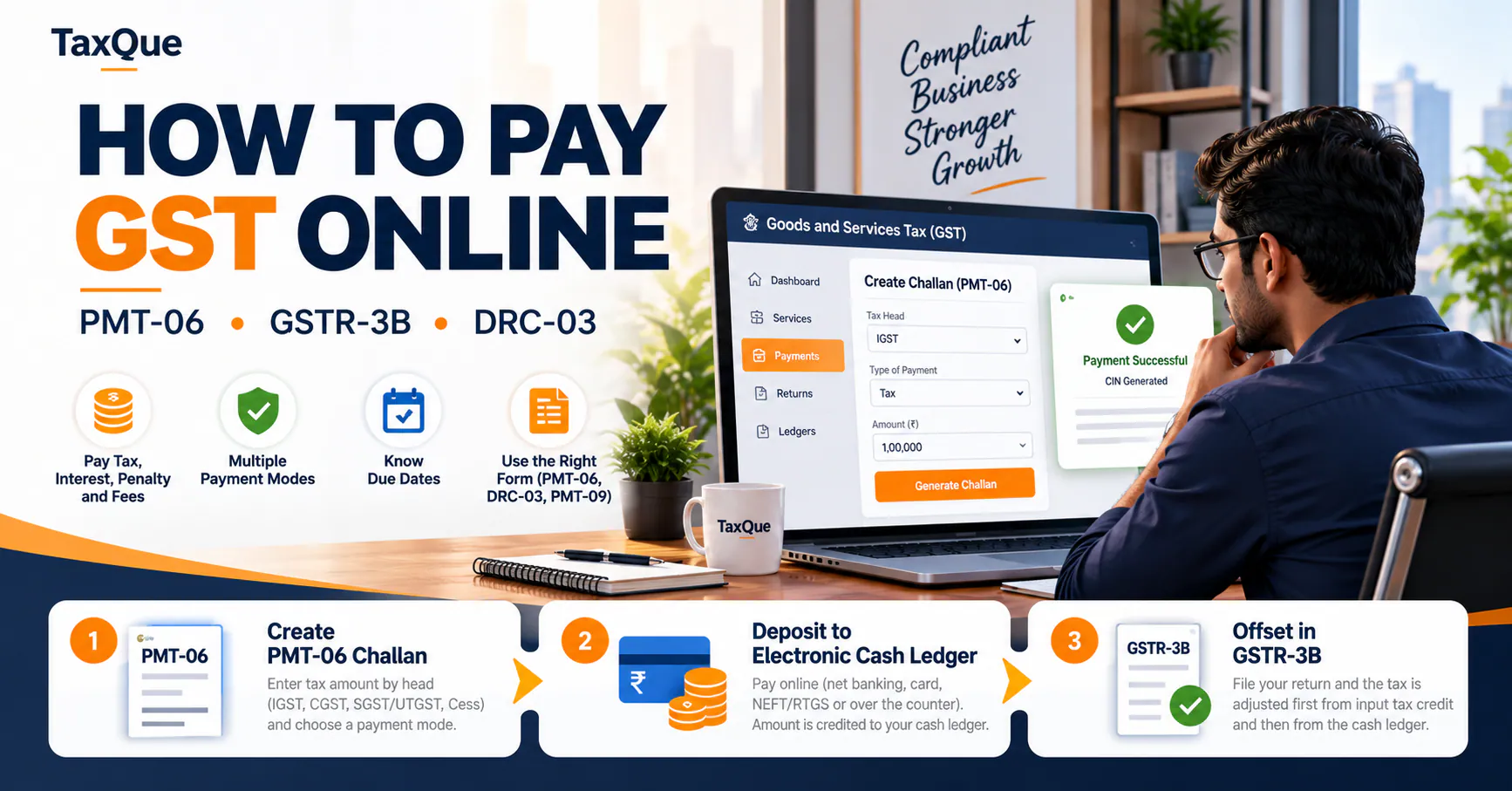
- Ensure sufficient balance in the electronic cash ledger and complete the liability payment. Existing input tax credit cannot be used to pay CMP-08 liabilities.
- File using the applicable authentication route and retain the ARN, final filed statement and payment evidence.
A cash deposit is not proof that the statement has been filed. Confirm the final status. Review before filing because CMP-08 is not a freely revisable draft after submission; an error needs the applicable adjustment or corrective process.
GST portal taxpayer welcome kit Official ↗ explains composition's cash-payment and annual-return structure.
Example: a trader's quarter
Assume an eligible trader has ₹10 lakh of turnover forming the applicable 1% tax base for the quarter and no other liability or adjustment in this illustration. The composition tax is ₹10,000. Reconcile any RCM and other required amounts separately; do not assume the turnover calculation alone settles the whole statement.
If the quarter has no outward sales, still check whether an inward RCM liability or another condition prevents nil treatment. “No sales” and “nothing to report or pay” are not always the same.
Do not confuse composition with an online-selling ban
Inter-State outward supplies and electronic-commerce arrangements need the current eligibility rules. A blanket statement that every goods supplier using an electronic-commerce operator is ineligible is outdated: the government introduced a conditional procedure for composition goods suppliers through ECOs in 2023.
Check the platform, goods, locations and current conditions. GST Council notification directory, including Notification 36/2023 ↗.
Close the year separately
Reconcile all four quarterly statements and payments with the annual GSTR-4. For FY 2024–25 onwards, the ordinary annual GSTR-4 due date is 30 June following the financial year, subject to any applicable extension. Keep quarterly filing and annual reconciliation as separate calendar entries.
Ask TaxQue to review the quarter with the composition status, turnover working and existing filed statements. Use the current portal instructions and notifications for the actual period.